Florida is well known for having beautiful natural springs, which are among the largest in the world. Before you make the trip to any of them, make sure you are prepared and know the rules to ensure the best experience. Here we will go over all the basics so you can explore Florida’s natural springs like a pro.

What’s Considered A Natural Spring?
We’ve heard and have seen a beautiful picture of a spring and that’s probably what caught our attention to visit one. But, what’s a natural spring?
A natural spring is a point where groundwater flows naturally from the Earth’s surface without being pumped. It occurs when water from an underground aquifer reaches the surface, usually through cracks in the ground.
Natural springs can be found in various environments, from mountains to flat lands.
Where The Water’s Spring Come From?
The water in springs typically comes from rain or melted snow that has seeped into the ground, filtered through soil and rocks, and collected in an aquifer.
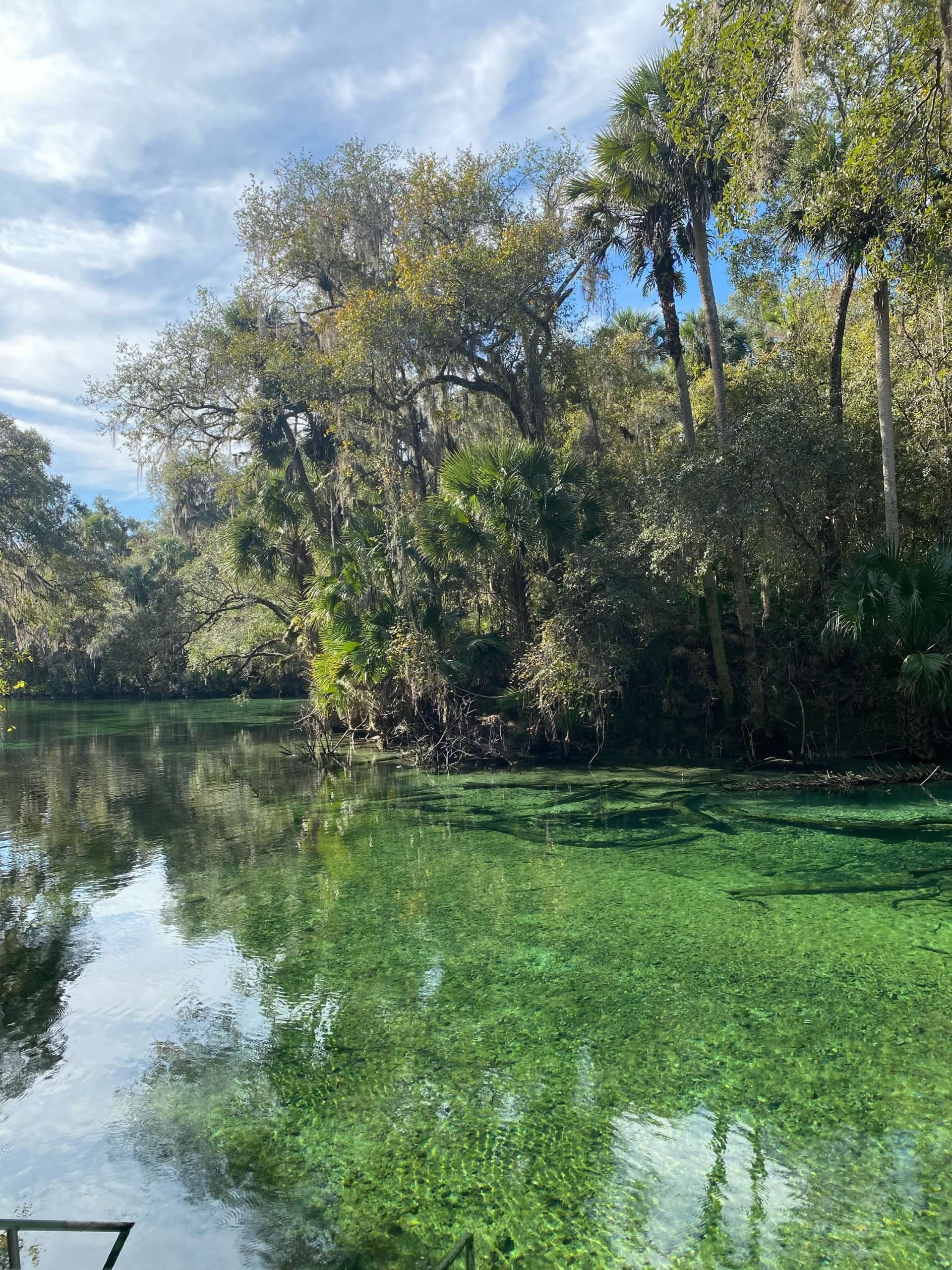
Because the water travels through soil and rocks before reaching the surface, this make the spring’s water clean and fresh but it will also depends on the surrounding geology and human activity.
Depending on the source, there are different types of springs such as hot springs, cold springs or mineral springs.
What Type of Springs Can Be Found In Florida?
Freshwater Springs
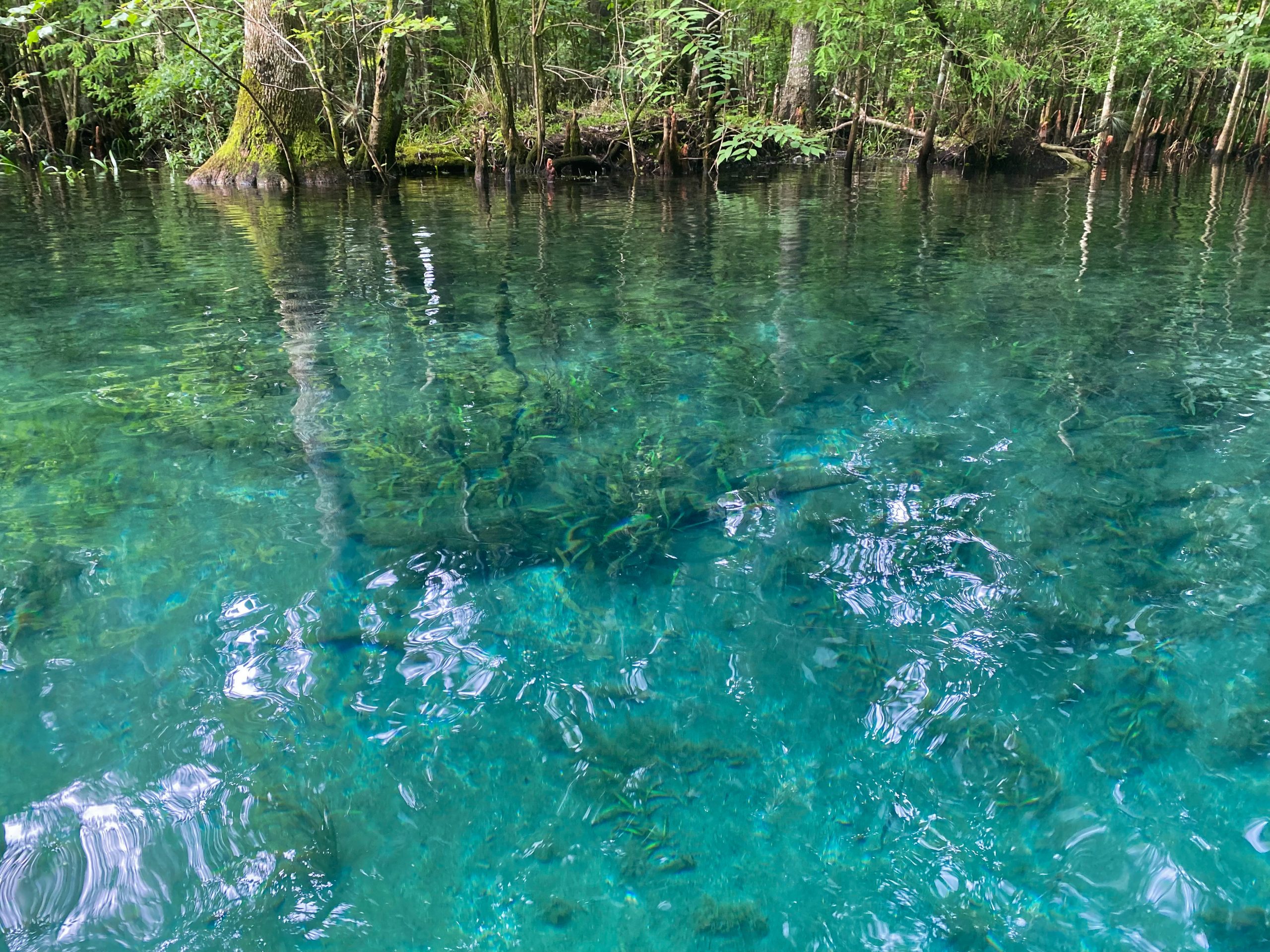
These are the most common springs in Florida, providing crystal-clear, cool water year-round.
The temperature is typically around 72 Fahrenheit (22 Celsius), making them refreshing and popular for swimming, snorkeling and diving specially during summer.
Examples of freshwater springs are Silver Springs and Wekiwa Springs.
Blue Hole Springs
These are deeper springs often found in sinkholes or caverns. Popular with experienced divers because they offer unique underwater landscapes.
An example is Devil’s Den.
Brackish Springs
These are found near coastal areas where freshwater mixes with saltwater from the Gulf of Mexico or the Atlantic Ocean.
They often support diverse ecosystems and mangroves.
For example, the springs near the Big Bend Seagrasses Aquatic Preserve.
Hot Springs
These are rare and not as prominent as in other states, but there a few. For example, Warm Mineral Springs located between Venice and Port Charlotte.
The temperature is around 85 Fahrenheit (29 Celsius) and contains high levels of dissolved minerals.
Why Florida Has So Many Springs?
This is because Florida’s porous limestone allows water to flow easily, forming aquifers and springs.
The state’s geology and abundant rainfall keep the aquifers replenished.
Also, sinkholes, caves and underground rivers are common features that facilitate spring formation.
Can You Swim At The Springs in Florida?
Yes, you can! Most springs in Florida are suitable for swimming. Even if you are not a swimmer, most springs have areas just like a pool where you can squat and just enjoy the water.
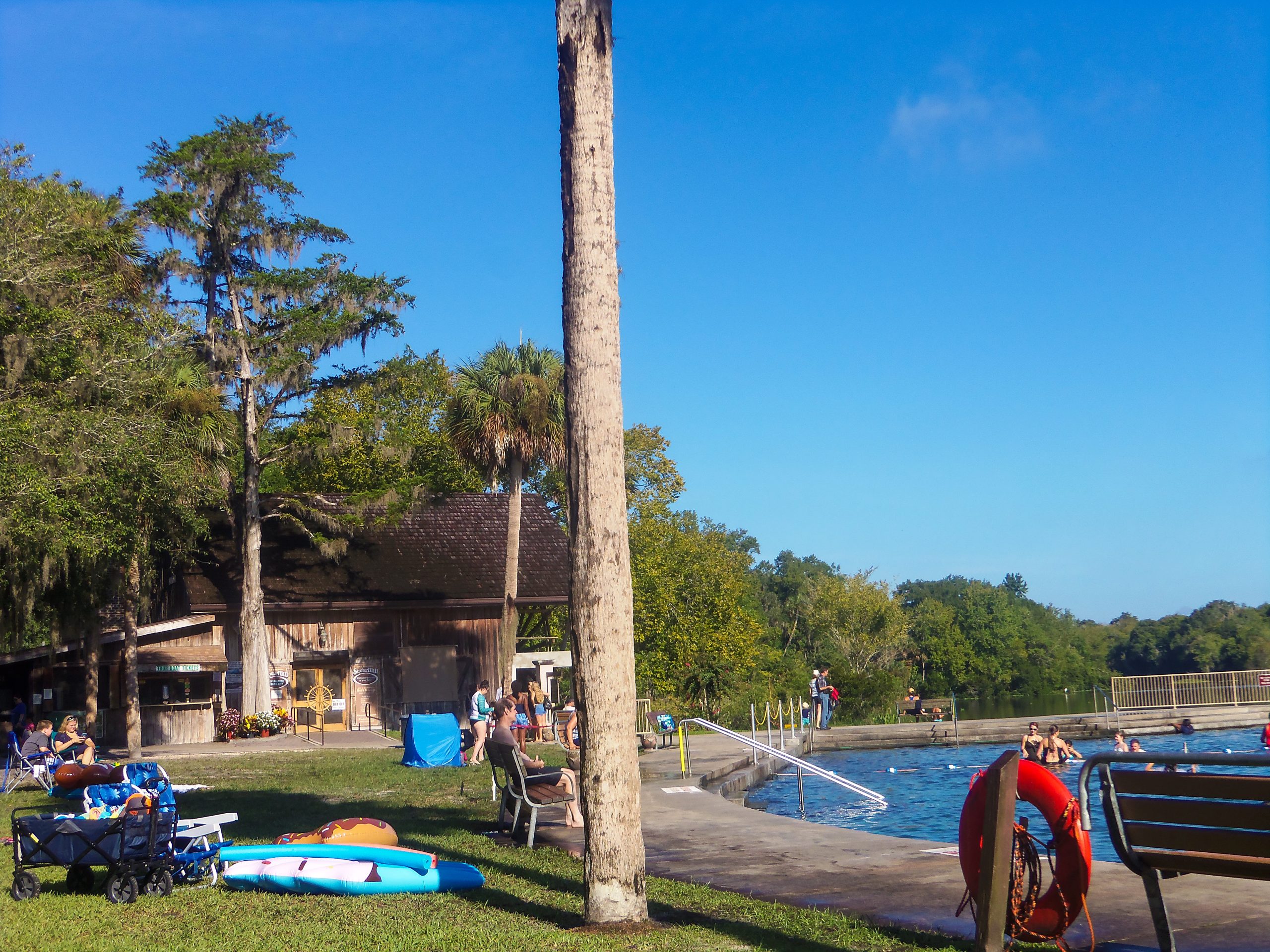
Each spring has its own set of rules and guidelines. These are the most popular springs where you can go swimming. Always check before visiting just to confirm in case of inclement weather or any other situations the park might decide to limit access.
Rainbow Springs State Park
This spring has large swimming area with lush, tropical surroundings.
The depths vary, so it’s great for families and swimmers of all levels.
Address: 19158 SW 81st Pl Rd, Dunnellon, Fl 34432
Hours: 8am-6:45pm
Silver Glen Springs
It has gorgeous turquoise water in a scenic forest setting.
Great for swimming and snorkeling.
Address: 5271 Fl-19, Salt Springs, Fl 32134
Hours: 8am-6pm
Blue Springs State Park
It’s only open for swimming during warmer months (April to October) when manatees are not present to protect the animals.
Address: 2100 W. French Ave. Orange City Fl 32763.
Hours: 8am-Sundown
Ginnie Springs
Popular for its clear water and diving opportunities. It has several areas for swimming and floating on tubes.
Address: 7300 NE Ginnie Spgs Rd, High Springs, Fl 32643
Hours: Weekdays 8am-5pm. Weekends 8am-6pm.
Wekiwa Springs State Park
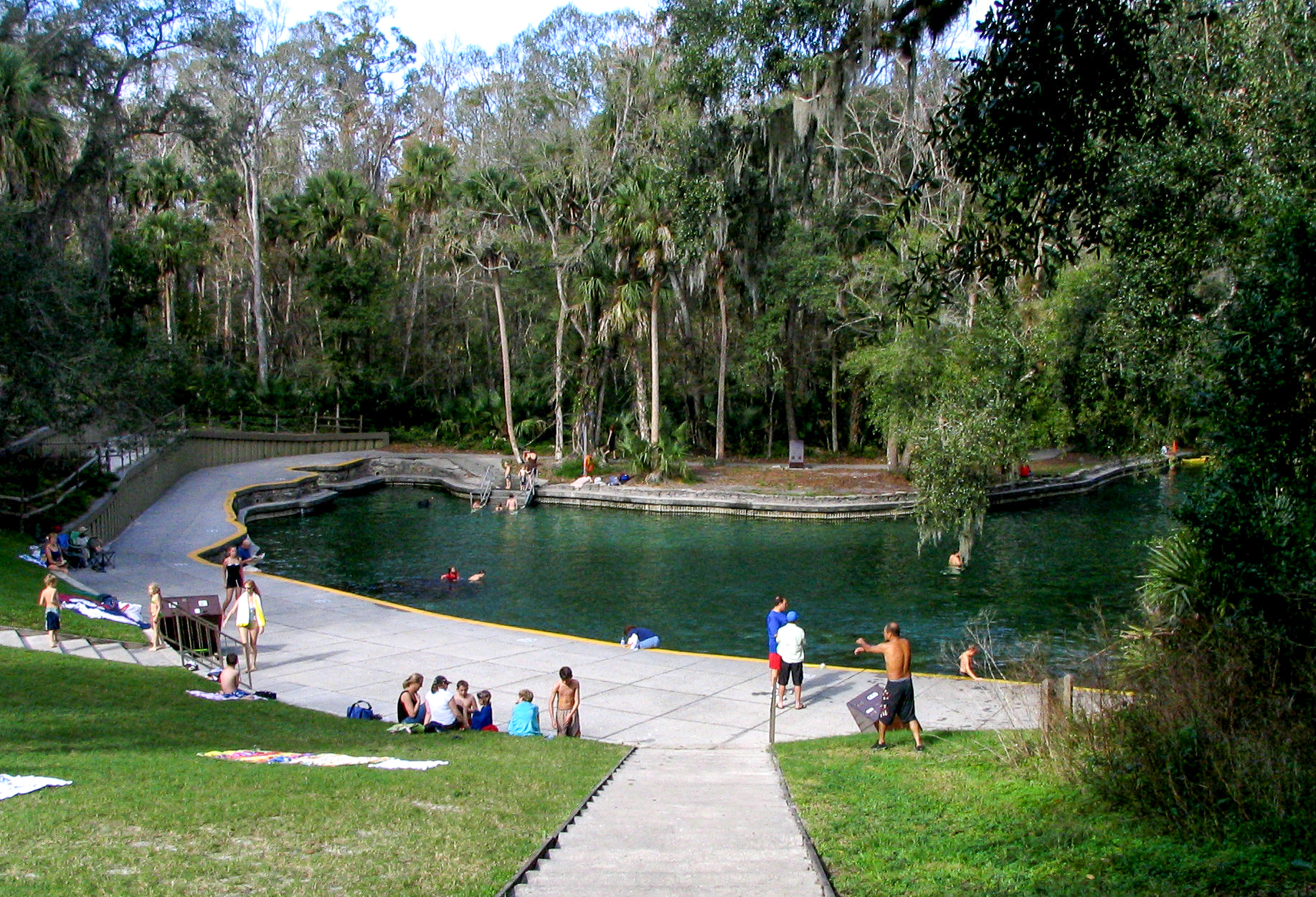
Shallow areas make it family-friendly, with plenty of space to swim and relax.
Address: 1800 Wekiwa Cir, Apopka, Fl 32712.
Hours: 8am-8pm
Are There Alligators In The Water At The Springs?
Yes, alligators can be found in the water at Florida’s springs, as they are native to the state and thrive in freshwater environments like rivers, lakes, wetlands and springs.
However, they are less commonly seen in popular swimming areas of the springs due to regular human activity and park management efforts. Just stay in the designated swimming areas and you should be fine.
You will have a higher chance to see an alligator in springs surrounded by lush vegetation or connected to rivers or lakes. These springs are usually the ones where you are only allowed to kayak or bring your boat. As long as everyone stays in their own space, everything should be fine as well.
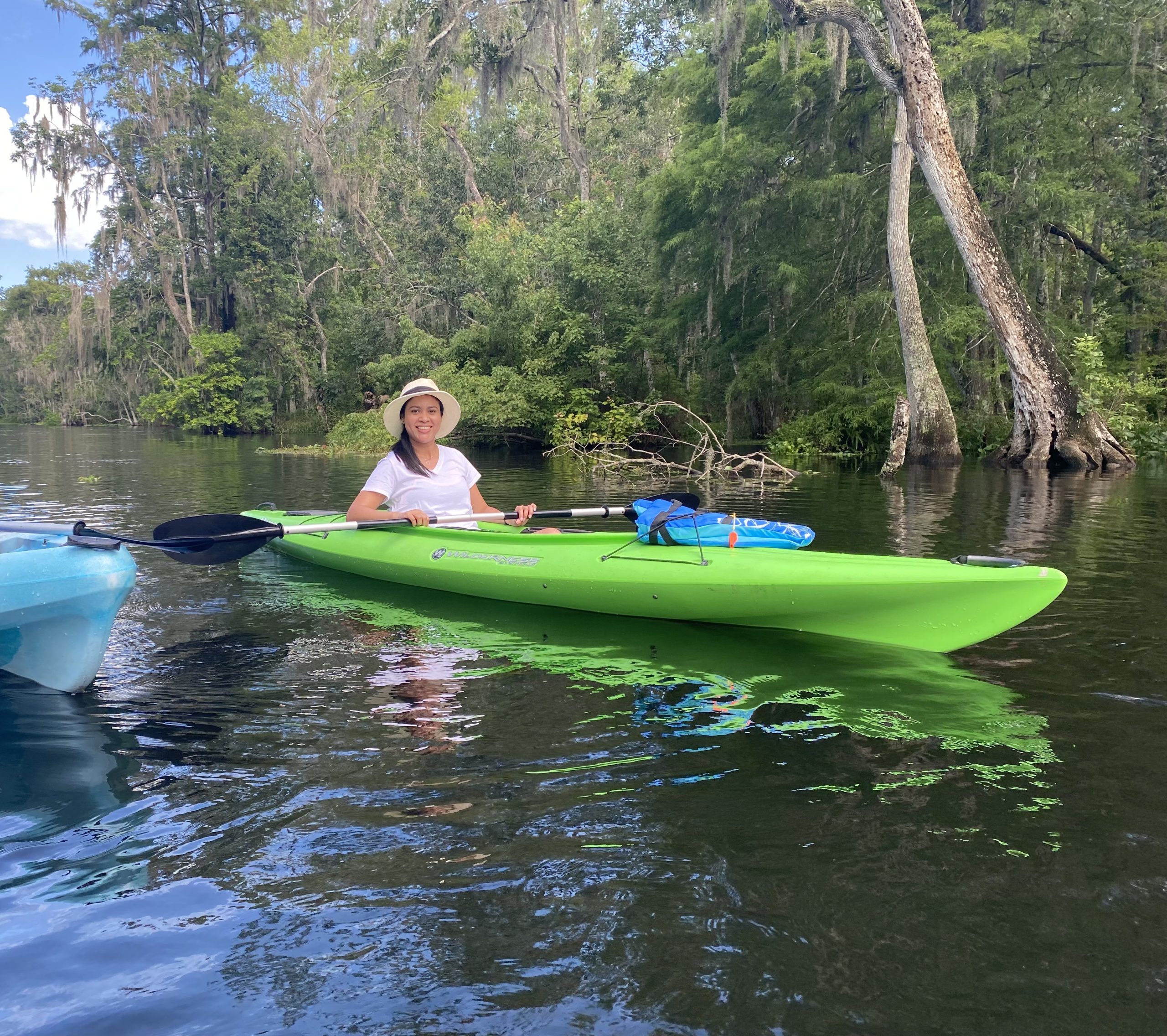
If you happen to see one just keep in mind they might be more scare of you than you are of them. Alligators are generally shy and avoid humans, but they can become aggressive if threatened, provoke or habituated to being fed by humans (which is illegal in Florida).
The crystal-clear water makes it easy to see the bottom and your surroundings, reducing the risks of proximity with anything in the water while swimming or snorkeling.
Can You Swim With Manatees In Florida’s Springs?
Yes, you can swim with manatees in certain Florida springs, but only in designated areas and under specific guidelines to ensure their protection and your safety.
These two are the best places to swim with manatees:
Crystal River (Three Sisters Springs), located in the Gulf Coast, is the most popular place in Florida where swimming with manatees is legally allowed and closely regulated.
Tours and guides are available to ensure the experience is safe and environmentally friendly.
The best time to visit is during winter (November to March) when manatees seek refuge in the warm spring waters.
Homosassa Springs Wildlife State Park offers manatee tours and allows swimming with manatees in certain areas near the park.
Swimming with manatees in Florida is a unique and magical experience, offering a rare opportunity to connect with these gentle giants in their natural habitat while promoting conservation.
These are some of the rules and guidelines for swimming with manatees:
- Do not chase, touch or disturb manatees. You read that right, we are not allowed to touch manatees because
- Use a certified tour operator, this guides are trained to ensure the safety of both visitors and manatees.
- Move slowly and stay calm to avoid alarming the manatees. No diving or splashing.
- Allow manatees to approach you rather than initiating contact.
Some parts of the springs are off-limits to swimmers to protect manatee habitats, do not try to sneak to get into this areas.
Manatees are listed as threatened species, and the springs are their critical winter habitats. Respecting their space and following the rules helps ensure their safety and survival.
What’s The Best Time To Visit A Spring?
This will depend on the type of activity and experience you are looking for. To make it easier we can look at it by season.
Spring and Fall (March to May/September to November)
These seasons are less busy than summer, especially during weekdays.
The mild air temperatures make it pleasant for kayaking, canoeing or hiking around the springs.
Because is raining less than during summer, this helps to maintain the crystal-clear water.
It’s also a good time to spot birds and other wildlife without the summer heat.
Winter (December to February)
Winter is usually less busy because of the cold. While the spring water stays warm, the air can be cooler.
But it’s the best time for manatee watching. Springs like Blue Springs State Park and Crystal River attract manatees seeking the warm water.
Summer (June to August)
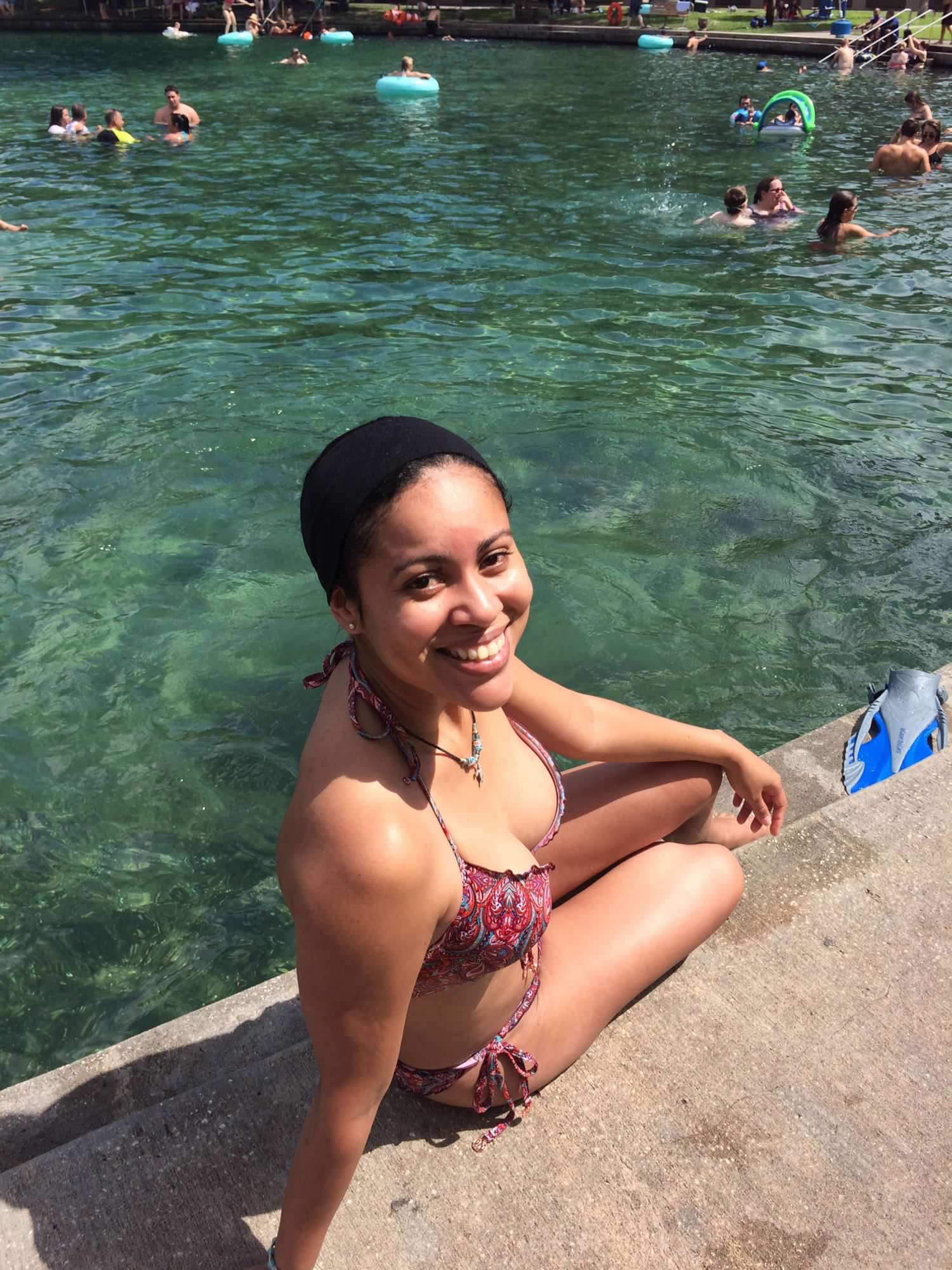
The perfect season for outdoor activities such as tubing, snorkeling and swimming to escape Florida’s hot and humid weather.
During summer springs can get crowded, especially on weekends and holidays, as locals and tourists flock to cool off.
Are Florida Springs Pet Friendly?
Some springs are pet friendly while some have strict no-pet policies, such as Blue Spring State Park, particularly to protect manatees and sensitive habitats. It is always a good practice to verify the rules for the specific spring you want to visit by checking their website or calling the park.
The parks that welcome pets will have important rules and restrictions to ensure the safety of the pets, wildlife and visitors.
Your pet will be most likely welcomed on trails, picnic areas, campgrounds and other designated areas.
These are some general rules to follow:
- Pets must typically be on leash.
- Pets are generally not allowed in swimming areas, spring runs or other water features to protect the ecosystem.
- Always clean up after your pet and dispose of waste properly to maintain cleanliness.
- Pets must be well-behaved and not aggressive toward people, other animals or wildlife.
Here there are some pet-friendly springs in Florida to visit with your pets:
- Wekiva Springs State Park
- Silver Springs State Park
- Manatee Springs State Park
- Rainbow Springs State Park
Florida’s springs are home to wildlife like alligators, snakes and birds. Make sure to keep your pet away from water’s edge and wildlife habitats.
Are Florida Springs Accessible For People With Disabilities?
Yes, many of Florida’s springs are accessible for people with disabilities, many parks are continually improving their facilities to accommodate visitors with diverse needs. However, accessibility levels vary by location, so it’s essential to check the specific spring you want to visit to verify amenities before visiting.
Here are some springs with notable accessibility features:
- Blue Springs State Park
- Rainbow Springs State Park
- Silver Springs State Park
These accessible springs offer amenities such as:
- Designated handicap parking spaces near the entrance or main attractions.
- Paved pathways or boardwalk paths leading to the main areas, such as picnic spots, observation decks or swimming areas.
- ADA-compliant restrooms and changing rooms.
- Ramps or lifts to assist people with disabilities into the water.
For those who cannot enter the water, parks often have wheelchair-friendly nature trails or boardwalks and observation decks overlooking the springs allowing visitors to enjoy the beauty of the surroundings.
Visiting during less crowded times can make navigation and accessing facilities easier.
Are Florida’s Springs Safe?
Yes, Florida’s springs are generally safe for visitors, as they are well-maintained and monitored by state and local authorities. However, as with any environment you explore, safety will also depends on following guidelines and being aware of your surroundings.
As a solo female traveler, I love visiting springs to either walk around or jump in the water. The best time will be during weekends or a day with some crowd, this way you will be surrounded by families or groups of people making you feel safe. You don’t want to be alone in the middle of the wild for many reasons, specially in Florida.
When it comes to swimming, many springs have sudden drop-offs, so children or non-swimmers should wear life vests or should be accompanied by someone else when getting in the water. Some springs have lifeguards on duty during peak season.
For general safety, avoid swimming in remote or unmonitored parts of the springs and at dawn or dusk.
Be cautious near the edges of water bodies where there is dense vegetation. While it can be rare in designated swimming areas, there could be a small chance of encountering wildlife.
What To Pack For Your Trip To A Spring?
If you are a good swimmer make sure to bring snorkeling gear. The water is so clear you can often see fish, turtles and underwater plants.
Even though some parks offer rentals for most activities, you can also bring your own kayaks or tubes to enhance your experience and save some money.
A wetsuit will help you stay warm and buoyant in the cool water, specially during winter.
If traveling with pets, bring water to ensure your pet stays hydrated, especially in Florida’s warm weather. Bring other supplies such as enough poop bags to dispose waste properly.
Rocks and pathways near springs can be slippery due to algae and moisture. It’s a good idea to wear water shoes for better traction.
If you were thinking of throwing all your stuff into a Ziploc bag to keep them dry, don’t. Some parks don’t allow any kind of plastic including Ziploc bags and plastic water bottles.
Pack a reusable water bottle and a small waterproof backpack to carry your stuff for activities like kayaking. The likelihood of you falling in the water is very minimal.
Avoid wearing regular sunscreen or insect repellent; instead get one labeled as reef-safe, as chemicals can harm the delicate ecosystems.
Other Things To Consider
During summer be prepared for sudden thunderstorms, which are common in the afternoon. Because of this is recommended to check the weather and avoid visiting after heavy rain, as water clarity can be affected.
Many springs have visitor limits, especially during peak seasons so plan to arrive early. Your best bet will be visiting during weekdays when is more quite.
Florida’s springs are not just natural wonders; they play a critical role in providing freshwater and supporting diverse ecosystems.
Make sure to subscribe to the Blog for more travel content just like this one!

